Build Updates
The Hidden Winch Bumper: Custom Steel, Smittybilt X2O Gen 2 10,000 lb, and the Recovery Kit
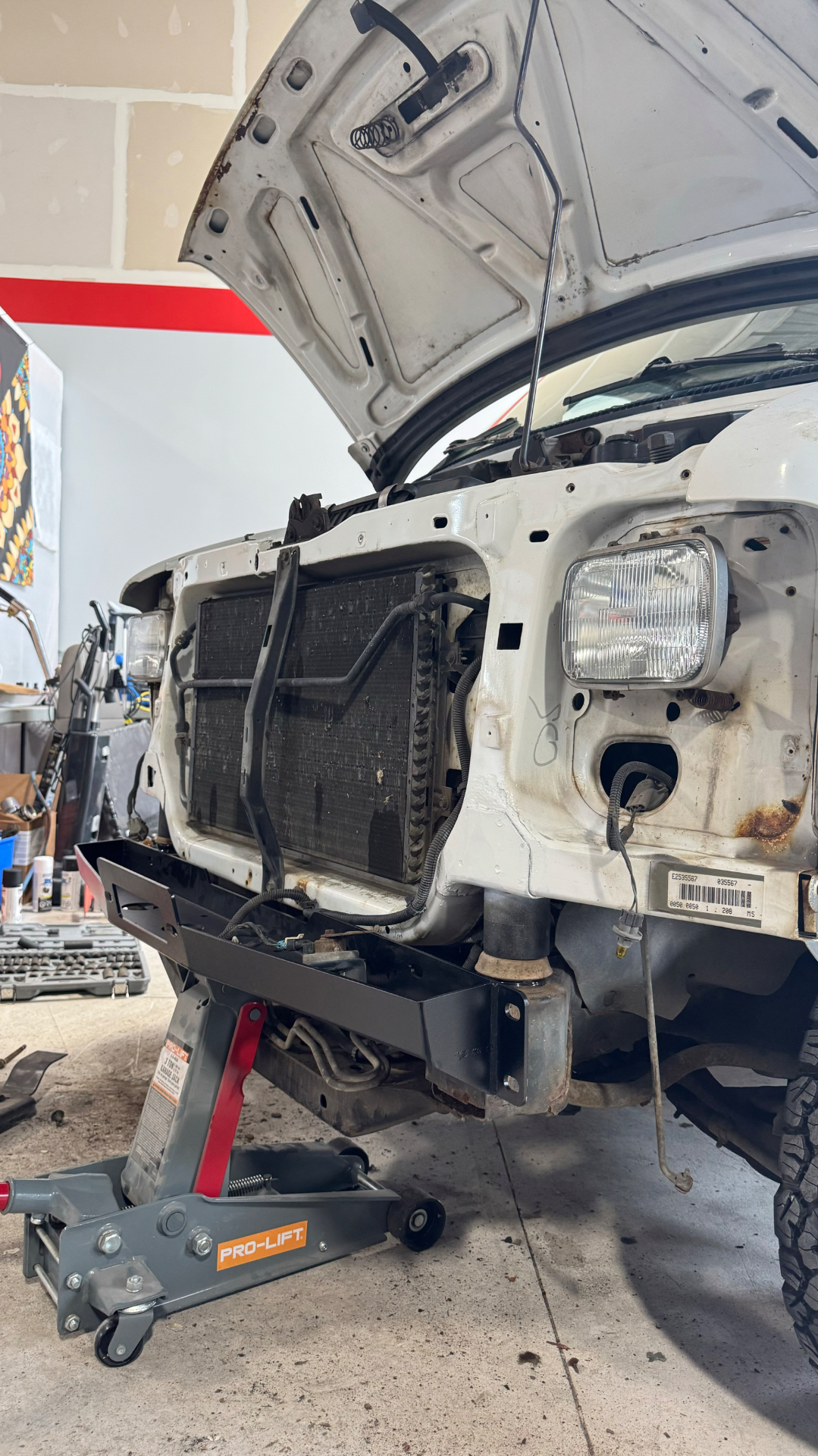
We didn't want a winch hanging off the front of the van like a bolt-on afterthought. So we built a hidden winch bumper to tuck it behind the steel — and stocked it with gear we actually trust.
The front of the van does two jobs now. It looks stock-ish from ten feet away, and it can pull itself (and a friend) out of a hole. That's the whole point of the hidden winch bumper.
The Hidden Bumper — Built First, Hidden Second
This is the inner bumper. It bolts directly to the frame horns and carries the winch tray. The full custom steel front bumper goes on top of this, wrapping around the winch so you'd never know it's there unless you crawled under and looked.
A few things we got right:
- Frame-horn mounting only. No sketchy tabs welded to thin sheet metal. The pull load goes straight into the frame.
- Tucked behind the grille. Approach angle stays clean and the winch stays out of the weather most of the time.
- Serviceable. Four bolts and the outer bumper comes off if we ever need to swap the winch.
The Winch — Smittybilt X2O Gen 2 10,000 lb
We went with the Smittybilt X2O Gen 2 10,000 lb (part #98510) — 10,000 lb rated pull with synthetic rope right out of the box. It's not a Warn, but Smittybilt X2O Gen 2 10,000 lb has earned a real reputation in the overland world and the spec sheet backs it up for what we're asking it to do.
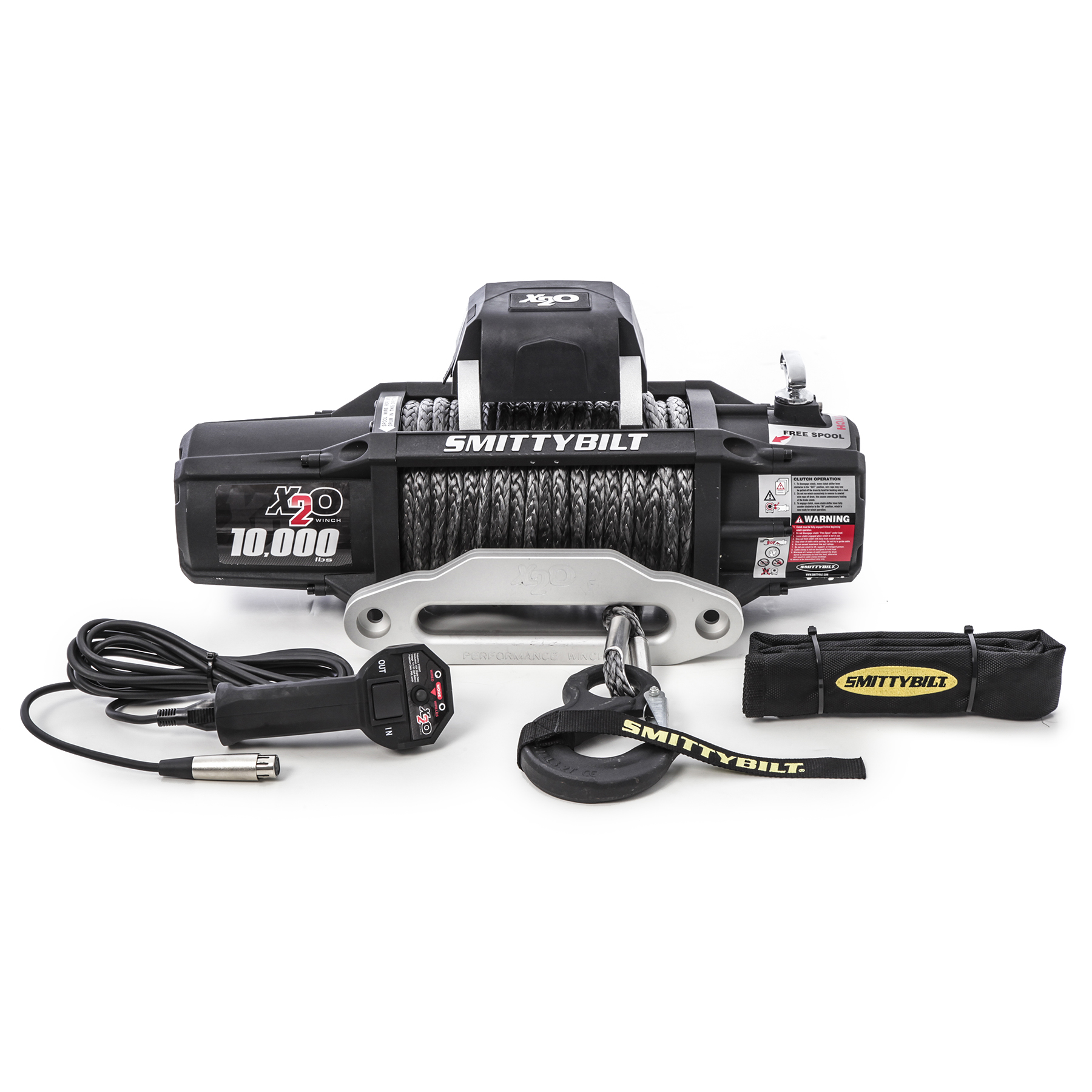
What we like:
- 10,000 lb single-line pull. The van weighs around 4,800 lb wet, so we're still well past the 1.5x vehicle-weight rule of thumb.
- 98.5 ft of 3/8" synthetic rope standard. Lighter than steel, safer if it lets go, and it stores better behind the bumper.
- IP68 waterproofing on the motor and contactor. BC creek crossings and PNW rain are exactly what this is built for.
- 6.6 hp series-wound motor, 218:1 gear ratio, 3-stage planetary gear train, automatic out-of-drum brake.
- Hawse fairlead, wired remote with a 12 ft lead, and a 5-year electrical / limited lifetime mechanical warranty.
What we'll see on the trail:
- We're running it off the GM AD244 145A alternator and stock battery for now — Smittybilt X2O Gen 2 10,000 lb recommends a 650 CCA minimum for winching, so a second AGM is on the list before we lean on it for anything serious.
The Recovery Kit — Excite Your Life (EW)
A winch by itself isn't recovery gear — it's one tool in a kit. Here's what lives in the bag:
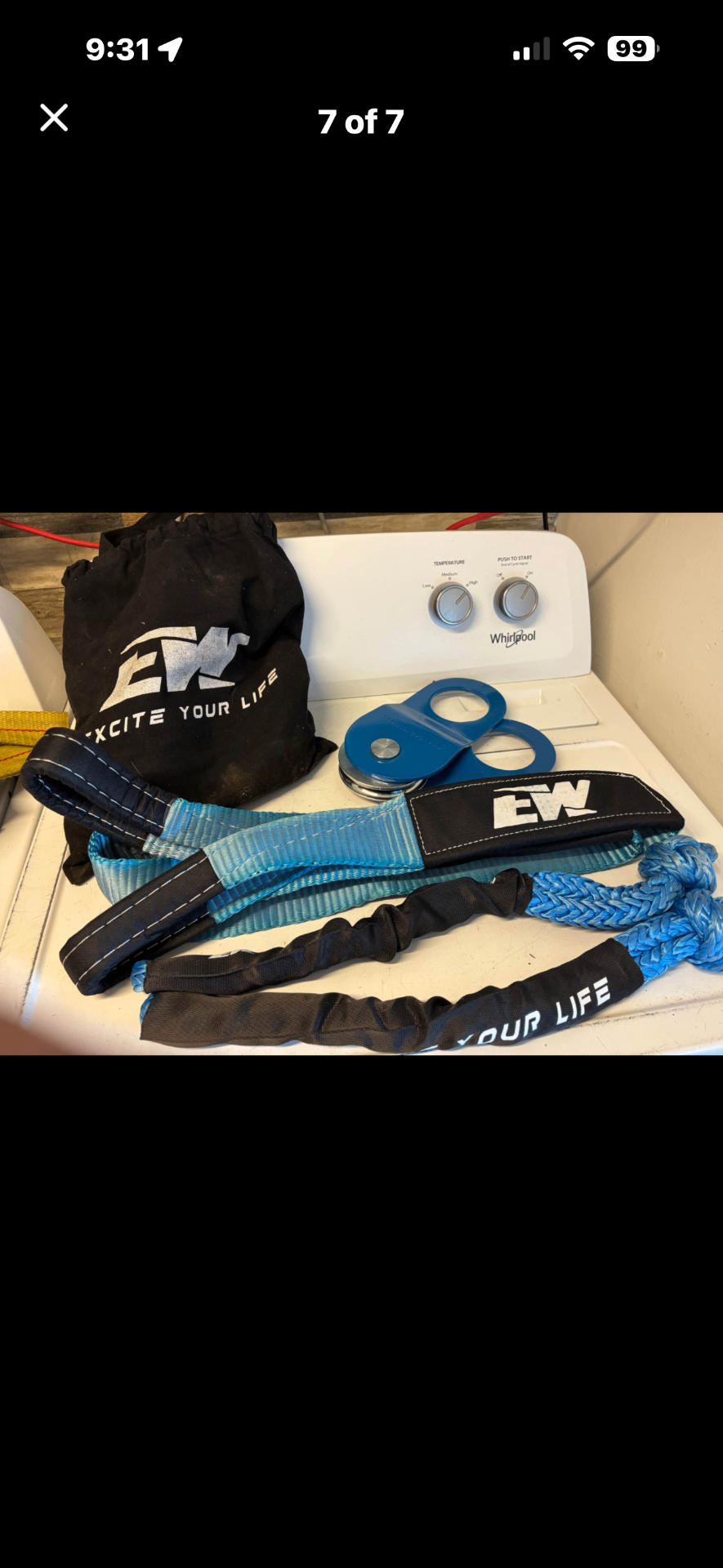
- Kinetic recovery rope — for the dynamic pulls a winch is wrong for.
- Soft shackles — lighter, safer, and they don't turn into projectiles if something lets go.
- Snatch block — doubles winch line pull and changes the angle when the anchor isn't straight ahead.
- Tree saver strap — because wrapping a winch line directly around a cedar is how you kill a tree and shred a line.
Recovery & Winching Tips — What We've Learned (and Been Taught)
We are not winch instructors. These are the rules we follow on the trail, learned from people who do this for a living and from the hard-earned mistakes of friends.
### When to reach for synthetic rope
- Most overland recoveries. Synthetic is lighter, easier to handle with bare hands, and stores most of its energy as stretch — not as a steel whip if it parts. For mud, snow, and gravel work on BC FSRs, it's the right call almost every time.
- When weight on the front matters. Synthetic is roughly 1/7 the weight of equivalent steel. On a 2WD Astro with a lifted front end, every pound off the nose helps.
- When you're winching solo or with new helpers. A parted synthetic line drops; a parted steel cable can kill. If anyone within 1.5x the line length isn't experienced, synthetic is the safer tool.
- Stick with steel if you're doing repeated rock drags where the line saws across abrasive edges, or working around real heat (exhaust, fires, hot machinery). Synthetic hates UV, chemicals, and sustained heat.
### Line-handling best practices
- Always run a line damper. A heavy jacket, a recovery bag, or a purpose-built damper draped over the middle of the line. If it lets go, the damper drops it straight down.
- Keep people out of the danger zone. Nobody stands within 1.5x the working line length of either anchor. No exceptions, no "just for a second."
- Wear leather gloves when spooling. Synthetic frays, and a broken strand will tear skin. Bare hands only on a fully unloaded line.
- Spool under light load. When re-spooling after a pull, keep 200–300 lb of tension on the line (a helper walking it back works) so it lays tight on the drum. Loose wraps bind under the next real pull.
- Check the hawse fairlead for burrs. Aluminum hawse + synthetic rope is forgiving, but any nick in the fairlead edge will chew a rope in one pull. Run a finger around it before every recovery.
- Use a tree saver, never a bare wrap. Wrapping the rope directly around a tree kills the tree, crushes the rope's outer braid, and creates a sharp bend that fails first.
- Soft shackles for synthetic, steel for steel. Don't mix a steel D-ring on a synthetic line at the anchor — the shackle pin is a stress concentrator. Soft shackles spread the load.
- Rig the snatch block when the pull isn't straight. Side-loading a winch drum twists the line into the housing and shortens the motor's life. A snatch block also doubles your effective pull when you're truly stuck.
- Free-spool out, power in. Pull the line out by hand with the clutch disengaged. Powering out wastes the battery and stresses the brake.
- Inspect after every recovery. Look for fuzzed strands, glazing (heat damage), and any cut deeper than the outer cover. Retire a rope as soon as you're unsure — they're cheaper than a windshield.
We'll add to this list as the van earns more scars.
What's Next
The outer custom steel bumper is in fab right now. Once it lands, the winch disappears entirely behind the grille and we'll do a proper before/after. We'll also wire in a quick-disconnect on the winch leads so we can pull the whole assembly in 15 minutes if we ever need to.
Built slowly. Built honestly. And built so the front of the van doesn't look like it's trying too hard.
Share this post
Comments
Loading comments…