BC Adventures
Overlanding BC: A Real-World Guide to British Columbia's Backcountry
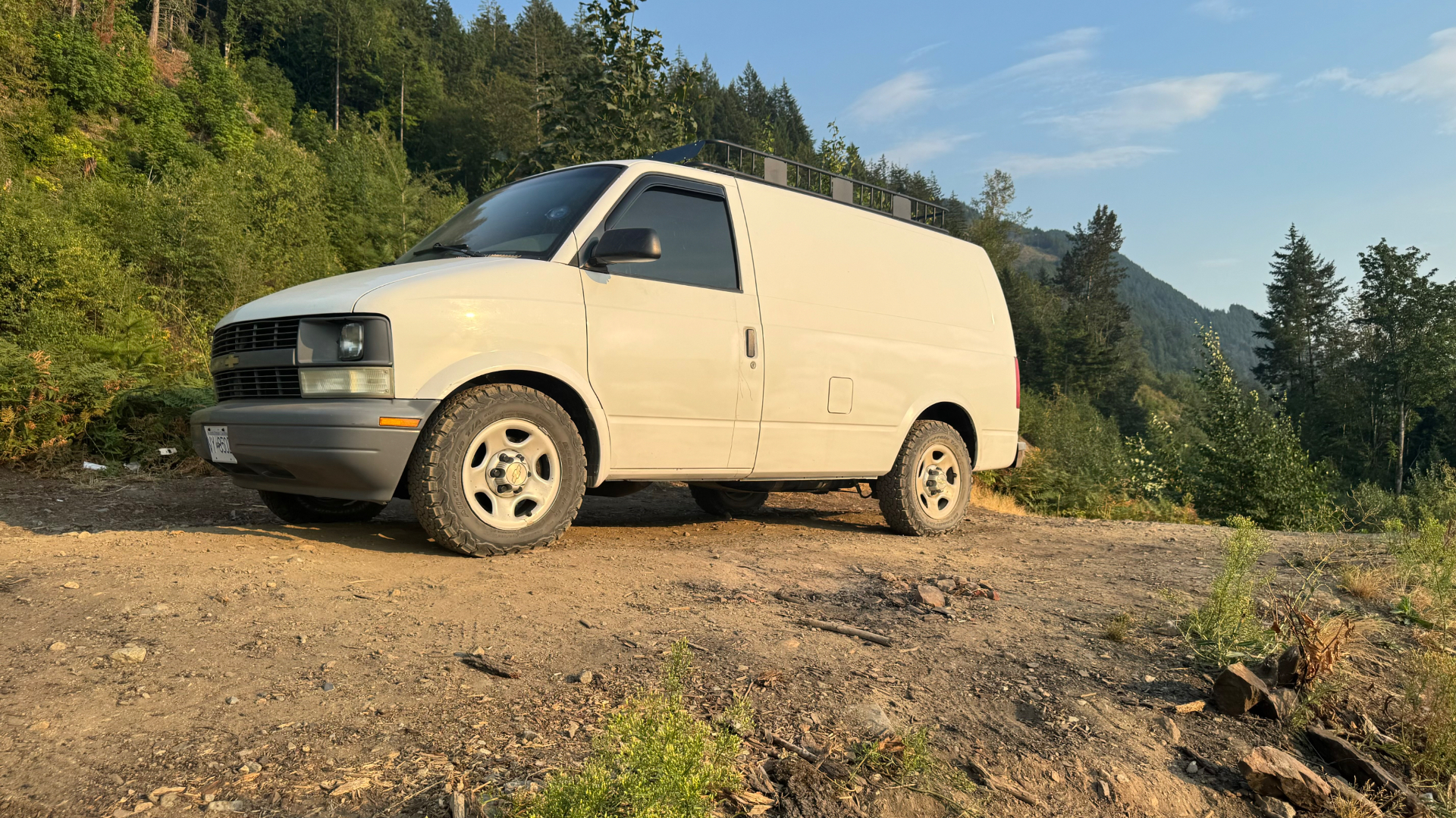
Everything we've actually learned overlanding British Columbia in a 2WD Astro — what FSRs to start on, what the road conditions really look like, what gear matters, and the local rules nobody writes down.
Overlanding BC isn''t a marketing word out here. It''s what people from Hope to Smithers have been doing for fifty years — loading the truck on Friday, sleeping at the end of a Forest Service Road, coming home Sunday tired and dusty. We''re a Chilliwack couple working on our 2005 Chevy Astro and writing down what we learn as we go. This is the post we wish someone had handed us when we started.
If you only read one section, read "Where to actually start" below. The rest is here when you need it.
What "overlanding BC" actually means
There''s no certificate. You don''t need a roof tent, a snorkel, or a $90,000 build. Overlanding in British Columbia, in plain language, is this:
- You drive somewhere remote on unpaved roads — usually a Forest Service Road (FSR) built for logging trucks.
- You sleep in or beside your vehicle, sometimes for one night, sometimes for a week.
- You bring the food, water, fuel, and recovery gear to be self-sufficient if something goes wrong.
That''s it. The vehicle doesn''t have to be a Land Cruiser. A Subaru, a stock Tacoma, an old van — all of these work for 80% of BC''s gravel. We''re doing it in a 2WD Astro and writing the playbook for that exact setup.
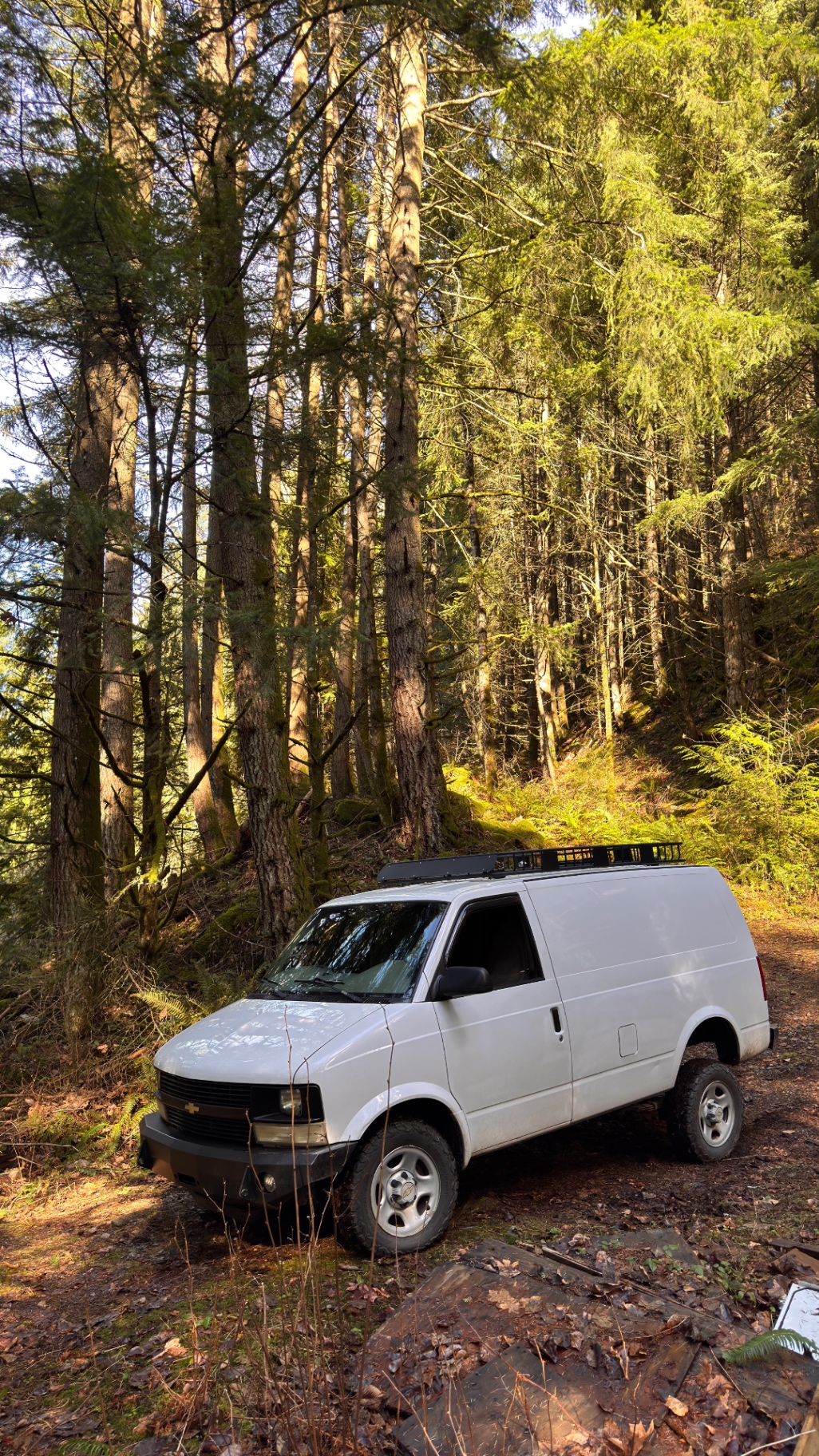
Where to actually start
Don''t start on a "famous" FSR. Start on a short, well-maintained one within 90 minutes of home, in daylight, in dry weather, with a full tank. Here''s the order we''d recommend if you''re Fraser Valley-based:
- Easy first trip (afternoon): Chilliwack Lake Road past the campground, or the lower stretch of Chilliwack River FSR. Mostly graded, lots of traffic, easy bail-outs. You''ll get a feel for washboard, blind corners, and how loud gravel is inside the cab.
- Easy overnighter: Harrison Lake West FSR up to one of the rec sites on the lake. Long, dusty, but well-travelled. This is where we did our first real shakedown and learned how much vibration loosens.
- Step up: Our three favourite hidden FSRs within an hour of Chilliwack. Quieter, narrower, fewer pull-outs. Go after you''ve done the first two.
If you''re not in the Fraser Valley, the same logic applies: graded forest road close to home → busy lake road → quieter side road. Don''t skip the boring first trip. That''s where you find out the fridge isn''t latched.
What the roads are actually like
Most BC FSRs are active logging roads. That changes how you drive them.
- Loaded trucks have the right of way. Always. You pull over.
- Many FSRs use radio call-up channels. The kilometre boards on the side of the road tell you which channel and which kilometre to announce. If you don''t have a VHF, drive slowly, stick to the right, and assume there''s a loaded truck around every blind corner.
- Conditions change weekly. A road that was glass-smooth in June can have washouts and fallen alders by September. The DriveBC and Recreation Sites and Trails BC pages help, but ground truth comes from people who were there last weekend.
- Cell service ends fast. Often within 10–15 minutes of the highway. Download your maps offline (Gaia GPS, onX Offroad, Avenza) before you leave pavement.
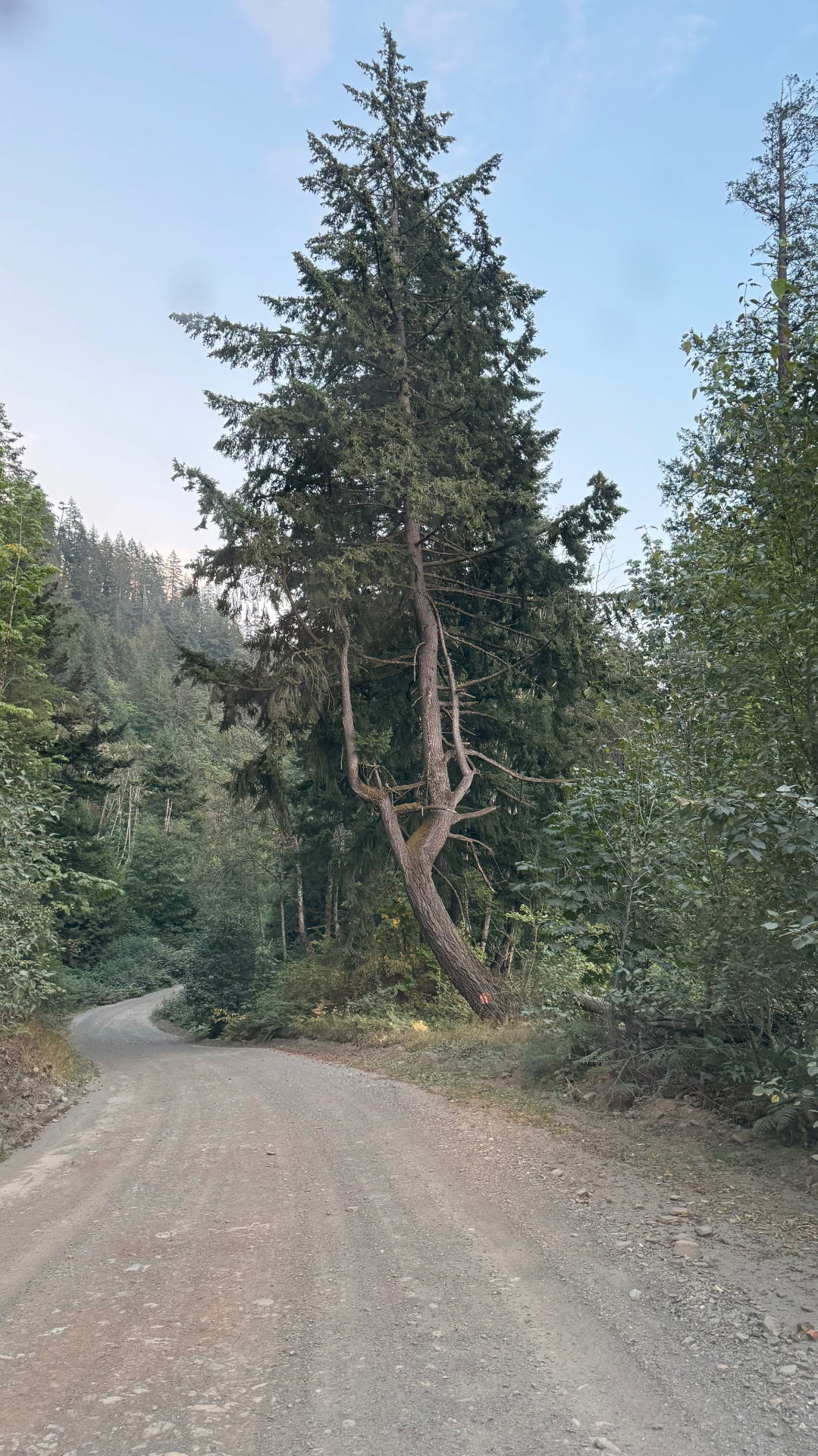
The "do I need 4WD?" question
Short answer: no, not for most BC gravel. Longer answer: you need *traction* and *ground clearance*, and 4WD is one way to get more of one of those things. We get most of it from:
- A limited-slip differential (we run an Eaton Truetrac — it''s why our 2WD Astro climbs gravel a stock Astro can''t).
- Real all-terrain tires at the right pressure. We drop to ~15 psi before any gravel that matters.
- A mild lift for clearance over rocks and ruts. Ours is the JOR 5" kit and we wrote up the install honestly, including what we''d do differently.
- The discipline to turn around when the road gets worse than the rig.
If you''re shopping a rig, we wrote the case for an Astro over a Sprinter — the budget math is the real argument, not the cool factor.
Gear that actually earns its spot
Skip the influencer kit list. After a year of trips, this is what we actually use:
- Recovery: A real recovery kit lives in our hidden winch bumper — winch, soft shackles, kinetic rope, a folding shovel, traction boards. You will get stuck. Have the tools to get unstuck without a tow.
- Tire pressure: A quality deflator (ARB E-Z) and a 12V compressor that can refill four tires without dying. Airing down is the single biggest comfort and traction upgrade you can make on gravel.
- Communication: A VHF radio for FSR call-ups, and a Garmin inReach or Zoleo for the moments cell service won''t come back. Tell someone your route and your check-in time. Every time.
- Water and fuel: Carry more of both than you think. BC distances on gravel eat fuel — our Astro''s real-world FSR mileage is closer to 13 mpg than its on-pavement 17.
- Sleep system: Whatever lets you sleep. A platform bed, a rooftop tent, a ground tent beside the vehicle. We''re still building ours out — that''s most of what The Build page covers.
The local rules nobody writes down
Things that aren''t on any sign but matter:
- Pack it out. All of it. Toilet paper, food scraps, fish guts, beer cans. The amount of garbage at the popular rec sites is the reason gates keep going up.
- Fires are a privilege, not a right. Check the BC Wildfire Service fire bans before you light anything. In a Category 3 ban, even a propane fire pit can be off-limits. We''ve had whole trips where we didn''t light a flame and the trip was still great.
- Drive like the locals you''re visiting. Slow on dust past parked vehicles. Wave. Pull over for trucks. If a small town''s gas station is the only one within 80 km, fill up there even if it''s 20¢ more — that''s how it stays open.
- Respect the land. Much of where we drive is on the unceded traditional territories of First Nations. The Seabird Island post is one example of trying to learn the place properly rather than just photograph it. We''re still learning.
When to go
- April–May: Lower elevation FSRs open up. Higher passes still snowed in. Mud is the main enemy.
- June–early July: Peak. Long days, most gates open, mosquitoes manageable if you''re moving.
- Late July–August: Wildfire season. Plan around smoke and bans. Have a backup region.
- September–early October: Our favourite. Cool nights, golden light, fewer people, alpine larches turning in the Interior.
- Winter: Different sport. Don''t start here.
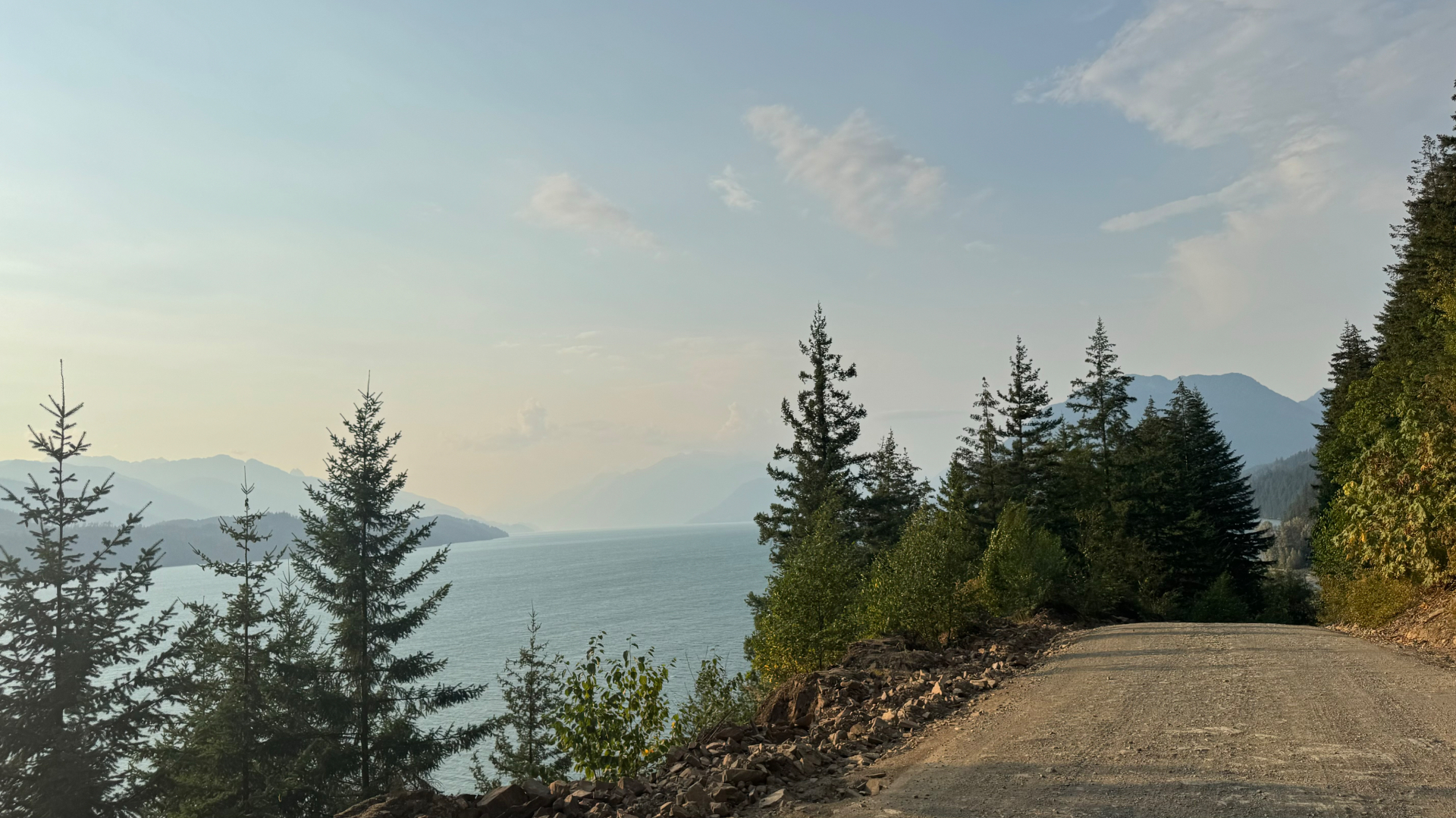
Sound-deadening, insulation, and other small things that matter on a long trip
Gravel is loud. The first time you drive 80 km of washboard, you''ll understand why we put Kilmat on every metal panel. Comfort isn''t a luxury on a long overland trip — it''s what determines whether you''re still having fun on day three.
What we''d tell our first-trip selves
- Air down before the gravel, not after.
- Tell someone your route. Stick to it.
- Bring twice the water.
- A boring trip you came home from is a better trip than an "epic" one you got rescued from.
- Stop and look at the mountains. The whole point of overlanding BC is that the mountains are right there.
Keep reading
Pick the post that matches what you''re trying to figure out:
- First time off pavement? Start with Overlanding in a 2WD: A BC Backcountry Guide.
- Looking for actual FSRs to drive? Fraser Valley''s Hidden FSRs and the Harrison Lake FSR trip report.
- Shopping or building a rig? Why we chose a 2005 Astro over a Sprinter and the JOR 5" lift install guide.
- Curious about a specific place we love? Seabird Island: Sq''éwqel, Sumás Mountain views, and a slow drive through Stó:lō country.
Got a question, or an FSR we should drive next? Send it to us — we read every message and answer as fast as gravel and cell service allow.
Share this post
Comments
Loading comments…